
Waterproofing layer
Waterproofing Membrane
The layer that decides where water goes. Membrane work is about continuity — an uninterrupted plane, detailed carefully at every corner, seam, curb and penetration.
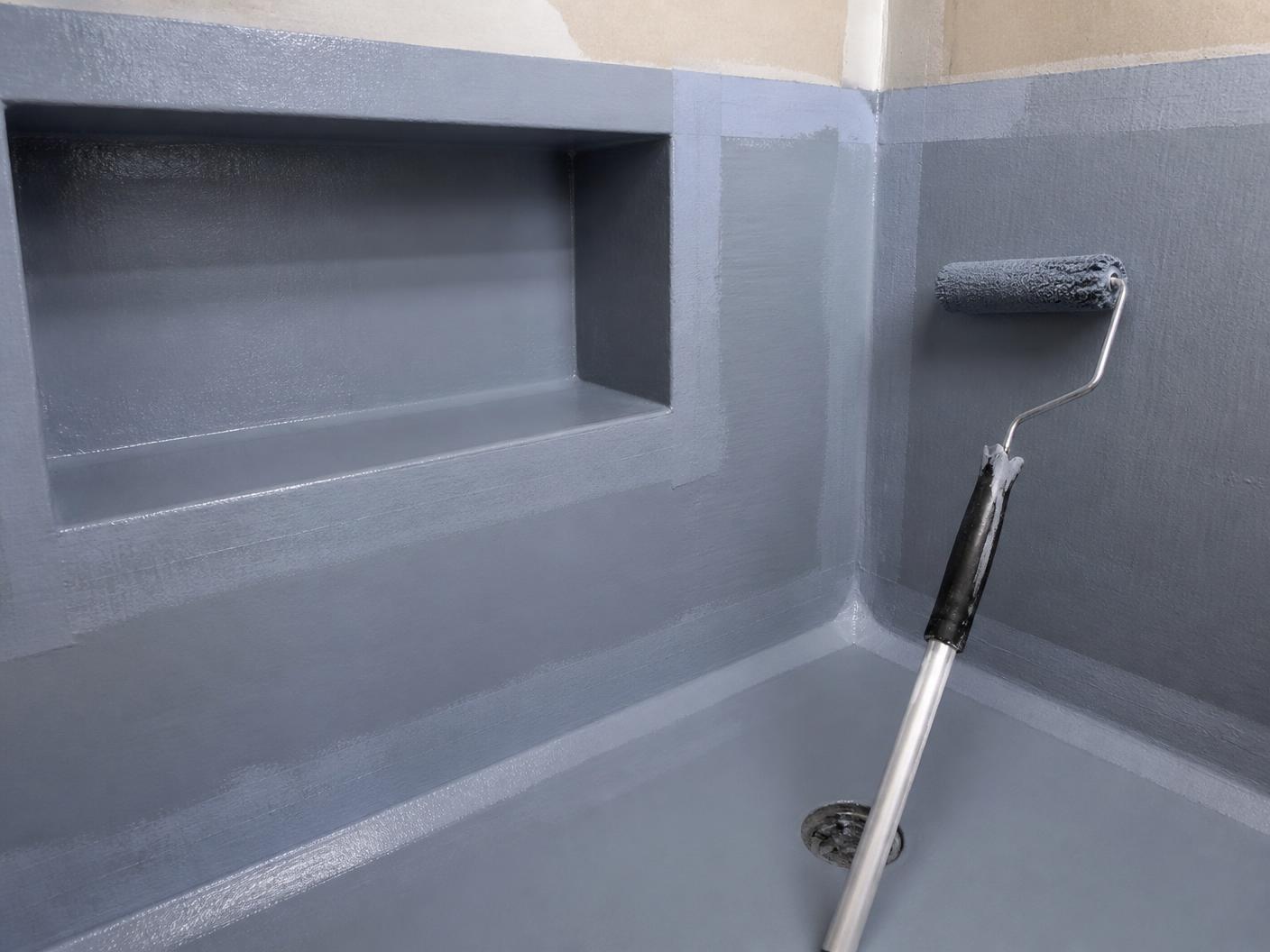
The purpose of a membrane
A waterproofing membrane is the component of a wet-area assembly that manages water at a defined plane. Tile and grout are not, on their own, a waterproof barrier — water reaches the layers behind them, and the membrane is what determines where it stops and how it is directed to the drain.
Depending on the assembly, this can be a liquid-applied coating, a sheet product, or a pan liner beneath a mortar bed. Each behaves differently and each has its own detailing requirements.
Where membrane is used
Membrane work belongs anywhere water is applied to a surface repeatedly and deliberately — most commonly showers, but also other wet areas within bathroom and washroom construction.
- Shower walls, floors and curbs
- Niches, benches and shelves within a shower enclosure
- Transitions between wall and floor, and at changes of plane
- Drain connections and pipe penetrations
Why detailing decides the outcome
A membrane only performs as a continuous layer. The risk is rarely in the middle of a flat wall — it is at the interruptions: inside and outside corners, seams between sheets or coats, the curb, the niche returns, and where the membrane meets the drain.
These points are where the plane changes direction or another material is introduced, so they are treated as their own piece of work rather than as an extension of the surrounding surface.
General preparation considerations
Before membrane work begins, the substrate needs to be sound, clean, fixed and at the intended plane, and the drain needs to be set and compatible with the chosen method. The waterproofing approach also has to be agreed in advance, because it changes the order of the other layers in the assembly.
- Substrate installed, secure and free of debris
- Drain type and height confirmed and compatible with the method
- Membrane approach agreed before the surrounding layers are built
- Curing and cure times respected before anything is applied over it
Questions
Membrane FAQs
Related services
- Read more
Scratch Coat
A keyed cement mortar base coat applied over lath or a prepared substrate to create a flat, mechanically sound surface for the layers that follow.
- Read more
Drypack
A stiff, low-water sand and cement mortar bed, packed and screeded to a precise plane or slope as a substrate for tile and stone.
- Read more
Shower Drypack
Shower floor and base preparation: drypack mortar packed and screeded to consistent slope toward the drain, ready for the finishing trades.
Request a Quote
Planning a shower or substrate build?
Send the project details and we will come back to you about scope, sequencing and scheduling.